Practice Notes / 03
Responsible practice
Clear permission and a dedicated practice setup belong at the beginning of every session.
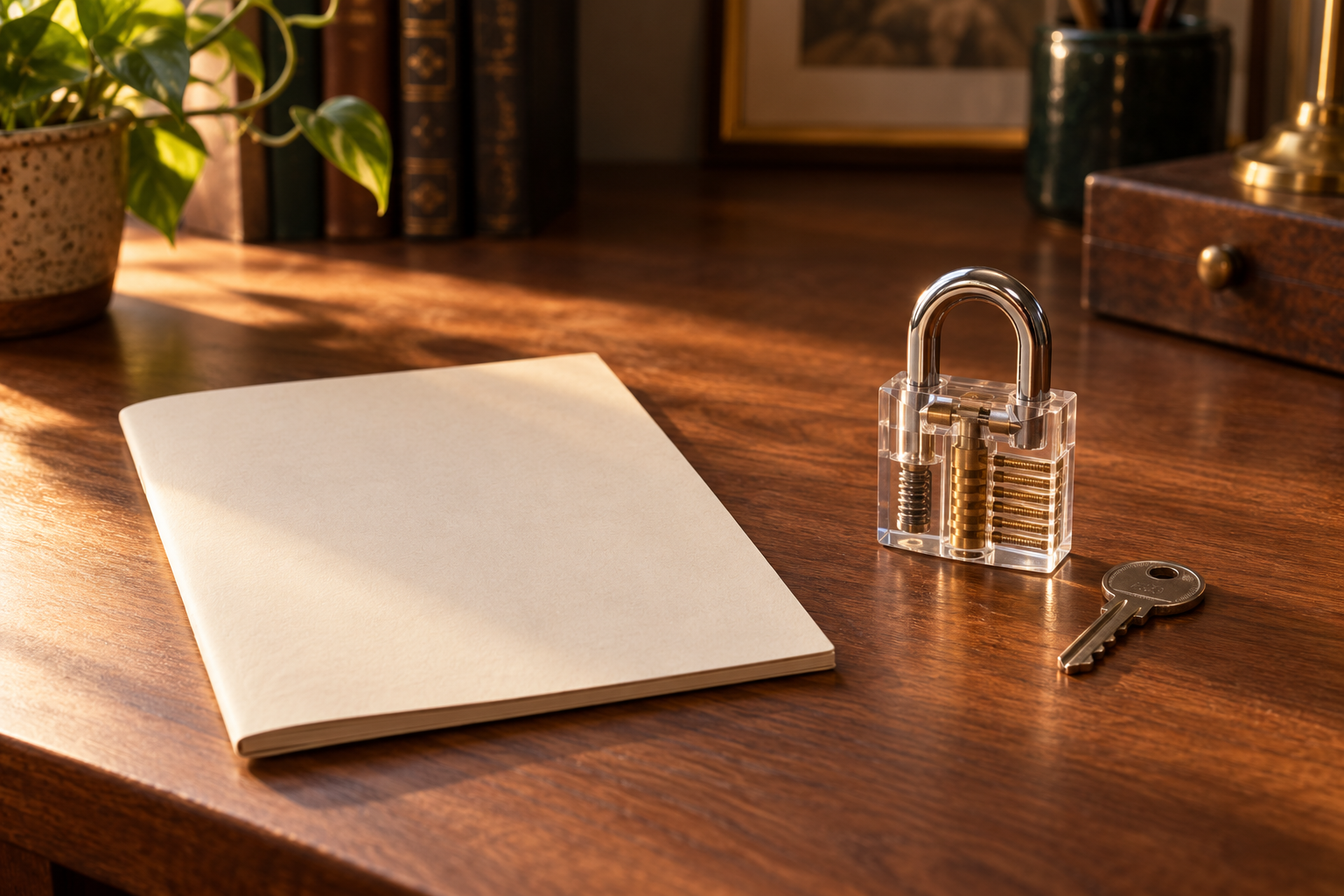
Make permission clear
Practice only on locks you own or have explicit permission to use for practice. If someone else owns the lock, be clear about what they have authorized before you begin. Being able to reach a lock is not permission to work on it. When ownership or permission is uncertain, leave it alone and choose a dedicated practice lock you are authorized to use.
Keep security separate
Choose a practice lock that is not relied on to secure anything. Leave doors, gates, cabinets, luggage, and other locks in everyday service out of your practice setup, even when you own them. Transparent practice locks belong in a learning setup, not in a role protecting property. Keeping practice separate helps make the purpose and boundaries of a session clear to everyone involved.
Check before you begin
Before buying, carrying, or using practice tools, check the laws and rules that apply where you are and where you plan to take them. Requirements can differ, and a product listing cannot establish what is permitted in every situation. If you are unsure, consult an appropriate local authority or qualified adviser. Keep the session focused on your authorized practice setup, and stop whenever those boundaries become unclear.