Use lock tools only on locks you own or are specifically authorized to service. Possession, licensing, and use rules vary by state, province, and locality. When a lock protects an occupied building, vehicle, workplace, or shared property, stop and use an authorized locksmith or the responsible property manager.
A broken key extractor is a thin, specialized locksmith tool used to engage and withdraw a key fragment from a lock cylinder. It can be useful when the fragment is visible or reachable, the cylinder is in a neutral position, and the user has clear authorization to service the lock. It is not a universal solution. A fragment turned inside the plug, a damaged cylinder, a high-security system, a vehicle lock, or a lock protecting an occupied property can require professional disassembly, decoding, replacement, or documentation. The central safety rule is to stop before a simple broken key becomes a damaged pin stack or an unusable entrance. This guide explains extractor types, the conditions that make a low-risk attempt reasonable, and the signs that call for an authorized locksmith. It does not provide a covert-entry method, and it should never be applied to property you do not own or manage with explicit permission.
What is a broken key extractor?
A broken key extractor is a narrow steel tool with a small hook, barb, spiral, or serrated edge designed to catch a key fragment without taking the place of the correct key. Professional kits may include several profiles because keyways, fragment shapes, and available clearance differ. The tool's job is limited: create enough purchase on the fragment to draw it outward. It should not be used as a lever to rotate the plug, probe unknown lock components, or force a keyway wider. Some situations are better served by removing the cylinder from the authorized side and servicing it on a bench; others require replacing the cylinder. The product category therefore belongs with locksmith service tools, not general-purpose lock-picking tools. Buyers should value thin, smooth stock, controlled hooks, corrosion-resistant finish, a secure handle, and clear manufacturer guidance more than a large piece count.
Why do keys break inside locks?
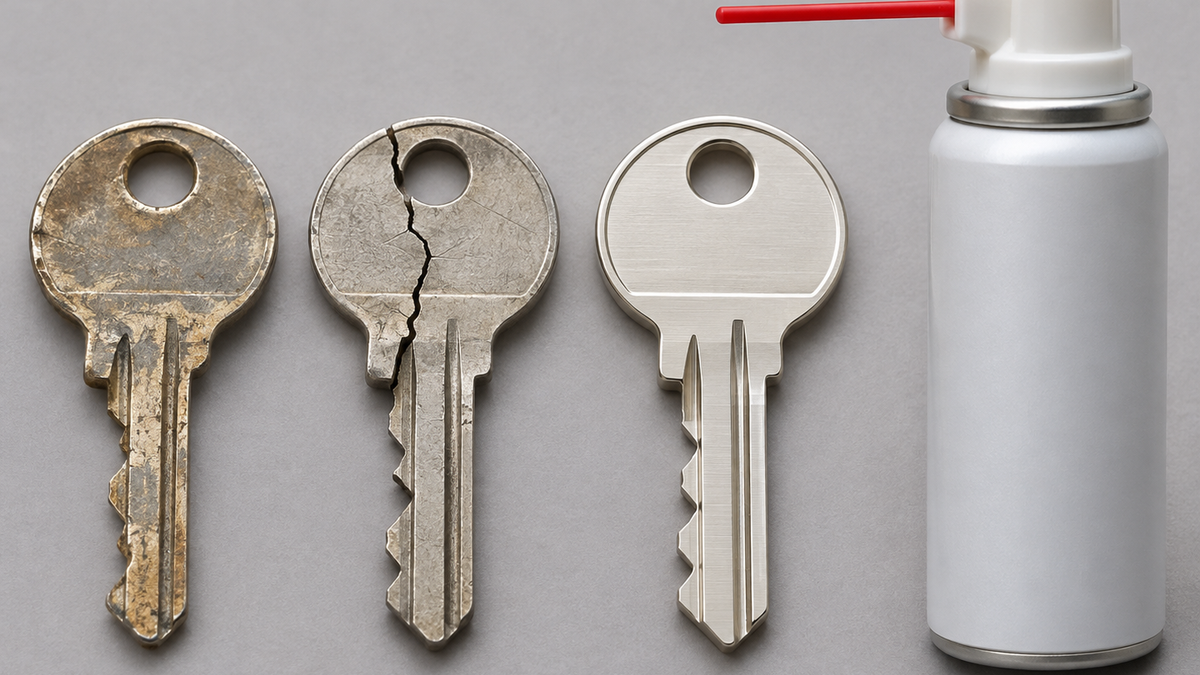
Keys usually break because metal fatigue, damage, poor duplication, misalignment, contamination, or a stiff mechanism concentrates force at a weak point. The U.S. Army's physical-security guidance notes that deep cuts and sharp angles make a key vulnerable to cracking if it is forced or twisted before full insertion. A worn key may already show bending, a hairline crack near the shoulder, rounded cuts, or a twisted blade. The lock may provide warnings too: the key requires wiggling, stops short, turns only with upward pressure, or works differently in changing weather. Brinks' 2026 cold-weather guidance explains that moisture can freeze inside a cylinder and that some lubricants thicken in low temperatures. These conditions should be corrected before the key is forced. Continuing to use a damaged duplicate or treating the key as a handle transfers stress to both the key and cylinder.
When is a careful extraction attempt reasonable?
A limited attempt may be reasonable when five conditions are met: you own or are authorized to service the lock; the broken piece is near the mouth of a conventional cylinder; the plug has not been rotated away from its normal key-removal position; the cylinder is stable and otherwise undamaged; and failure will not trap a person, disable required egress, or leave a property unsecured. Document the authorization and the lock's condition. Use eye protection, good lighting, and the extractor profile intended for that keyway. Apply only gentle outward engagement. If the fragment does not move promptly, stop rather than repeating deeper or harder passes. Avoid adhesives, improvised blades, drills, heated objects, and liquids not approved by the lock maker. They can push the fragment farther in, bond moving parts, injure the user, or make professional service more difficult.

When should you call a locksmith immediately?
Call an authorized locksmith when the fragment is deep or rotated, the cylinder is high-security or restricted, the lock is on a vehicle or safe, the door cannot be secured, a child or vulnerable person could be affected, or there is any dispute about ownership or access. Professional help is also appropriate when part of the key is missing, another object is already lodged in the keyway, the plug or face is damaged, or an earlier attempt changed the lock's feel. Commercial and institutional sites may require incident records, key-control actions, or replacement rather than simple extraction. U.S. Fish & Wildlife Service policy, for example, links lost high-security keys with inquiry and immediate replacement or rekeying; private properties have their own requirements. A locksmith can assess the entire cylinder, make a safe working key when authorized, and identify the mechanical cause so the failure is less likely to recur.
How do you choose a broken key extractor tool?
Choose an extractor for the keyway and service context, not by the number of pieces in the package. A shallow hook may suit a fragment with an accessible cut, while a fine serrated profile may provide contact along an edge; the manufacturer should explain intended use. The shaft must be thin enough to share the keyway with the fragment without scraping pins or wafers. The handle should support controlled straight pulling and make the working end easy to identify. Inspect finishing under good light: rough stamping, oversized barbs, corrosion, and sharp handle edges reduce control. For professional kits, replaceable profiles and organized storage help prevent a damaged extractor from returning to service. No extractor should be marketed or treated as compatible with every lock.
What should happen after the fragment is removed?
Removal is only the first step. Keep both key pieces and compare them to confirm the entire blade has been recovered. Do not immediately insert the broken pieces or another worn duplicate. With the property secured, test the cylinder according to the manufacturer's instructions and have a locksmith inspect it if movement remains rough. The cause may be a bent key, contaminated keyway, misaligned door hardware, worn cam, damaged pin or wafer, or weather exposure. Use only a lock-specific maintenance product approved for that cylinder; mixing oils, graphite, cleaners, and de-icers can create residue. Replace cracked or bent keys and make new copies from a sound original or authorized code. Where a key's identity or custody has been compromised, follow the property's rekeying and key-control policy rather than assuming extraction restores security.
How can broken keys be prevented?
Prevention starts with inspection and low force. Retire keys that are bent, cracked, deeply worn, or poorly duplicated. Insert a key fully before turning it, and operate the knob, lever, or padlock body rather than pulling the door with the key. Correct a sagging door or misaligned strike that makes the lock carry load. Keep outdoor locks sheltered where practical and follow the maker's cleaning and lubrication schedule. In cold weather, address moisture and use only a product specified for the temperature and lock type. Store spare keys so they are not twisted under heavy objects. For workplaces, record who holds each key and establish a process for damage, loss, and replacement. These habits cost less than extracting a fragment and reduce the chance that an access problem becomes an emergency.
A practical product-discovery path
For an authorized bench or service kit, look for a compact extractor set with clearly differentiated profiles, smooth finishing, a protective case, and usage guidance. Pair it with inspection lighting, eye protection, and approved lock-care supplies rather than improvised blades or adhesives.
Frequently Asked Questions
Can pliers remove a broken key?
Only when enough of the fragment projects to allow a straight, gentle grip. Pliers can crush or twist a short fragment; stop if the piece is not readily accessible.
Can glue pull a key fragment out?
Glue can bond the fragment to internal components or block the keyway. It is not a controlled substitute for an extractor or professional service.
Should I lubricate before extraction?
Use only a lock-specific product approved by the manufacturer, and avoid flooding the cylinder. An unsuitable liquid can carry debris deeper or complicate service.
Does removing the key mean the lock is safe to use?
No. Inspect the cylinder, correct the cause, replace damaged keys, and follow any rekeying or key-control requirement.
Sources
- U.S. Army Physical Security guidance (Published August 2010; warns that forced or twisted keys can crack and recommends cleaning/lubricating a difficult cylinder.)
- U.S. Fish & Wildlife Service Keys, Locks, and Locking Devices (Accessed 2026-11-01; requires regular inspection and immediate rekeying/replacement in specified lost-key situations.)
- Brinks Locks Padlocks and Cold Weather (Updated 2026-08-03; notes moisture freezing and unsuitable lubricant as cold-weather causes of stiffness.)
