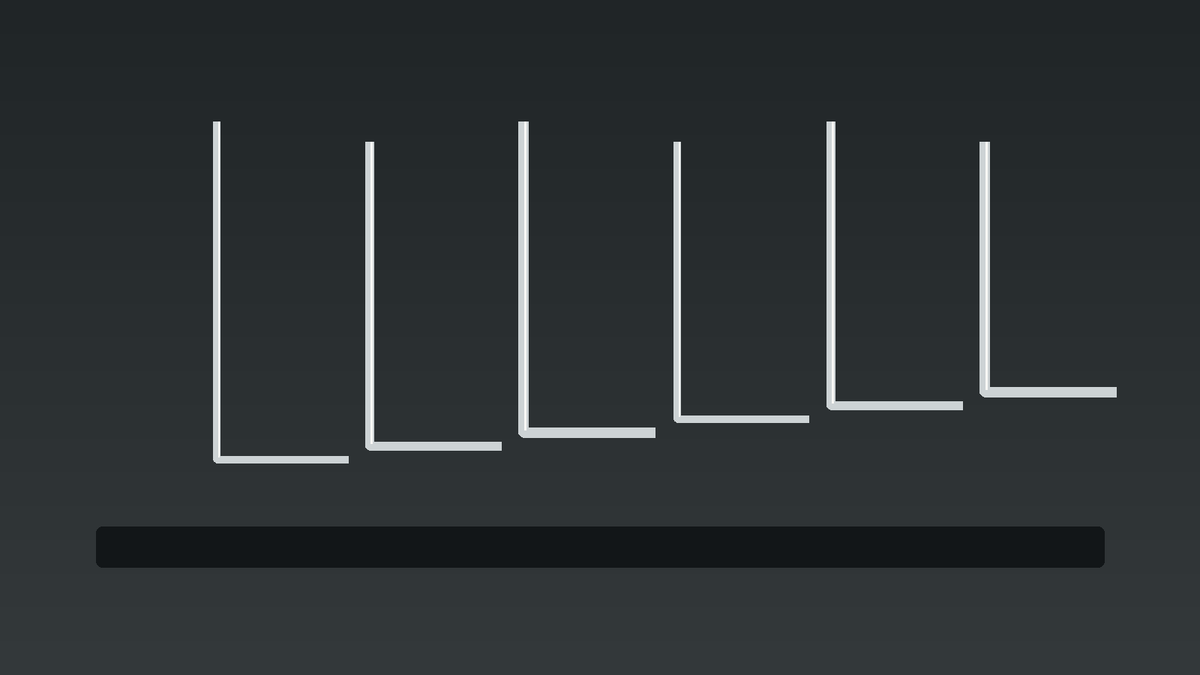
A lock picking tension wrench, more accurately called a turning tool, applies controlled rotational pressure to a lock plug during authorized training. That light pressure creates a binding order among the pin stacks and carries subtle feedback back to the hand. Once all pins are correctly aligned in a simple trainer, the same tool turns the plug. It is not a lever for forcing a cylinder. The best tool is therefore not the strongest or longest one; it is the tool that sits securely in the practice keyway, leaves enough room for the pick, and lets the learner make small repeatable changes. Use it only in a detached trainer or with explicit authority.
How should a tension tool fit?
Fit should be stable without wedging. The tool should engage the keyway edge with minimal wobble, remain seated under light pressure, and spring back without permanent twist. If it blocks most of the opening, scrapes both walls, or must be hammered or bent into place, it is too large or the wrong profile. If it spins, falls out, or requires a clenched grip, it may be too small. Keyways differ, so dimensions printed on a set are only a starting point. Test fit on the detached trainer with no pick inserted, and confirm that the correct key still operates smoothly before and after the session.
What is the difference between bottom and top placement?
Bottom-of-keyway placement uses the lower portion of the opening and is often intuitive on an open beginner keyway. It can reduce the pick’s working space or contact the plug face if the tool is oversized. Top-of-keyway placement uses the upper edge and can leave more room below, but it requires a tool shaped to stay seated there. Neither placement is universally better. Choose the position that is stable, does not distort the keyway, and provides clear feedback in the specific practice cylinder. Changing placement also changes leverage, so reset your pressure rather than carrying the same hand force from one arrangement to another.

How do thickness, width, and length affect control?
Thickness and width determine how fully the tool engages the opening. A closer fit usually reduces lost motion, while a thinner tool may fit restrictive keyways but flex more. Handle length changes leverage: a long handle makes tiny forces easier to apply but can exaggerate accidental movement; a short handle can feel direct but may demand finer finger control. Material and heat treatment affect spring and durability, yet a specification cannot replace inspection. Reject tools with sharp burrs, cracks, deep corrosion, or a permanent twist. For beginners, a small range of purposeful sizes is more useful than many duplicates that make selection harder.
What feedback should travel through the tool?
The turning tool can reveal a small plug movement, a change in resistance, a set pin dropping when pressure is released, or an overset condition that clears after a reset. Feedback is often quieter than expected. A tool held in a relaxed fingertip grip transmits more information than one squeezed in a fist. Resting the hand on the table can also reduce large unintended movements. Do not chase clicks as a score. In a transparent trainer, compare what is visible with what the turning tool reports. Over time, the learner should be able to reproduce light, medium, and reset pressure intentionally rather than relying on vague descriptions.
Why do beginners often use too much tension?
Heavy pressure can create an immediate sense of control because the tool stops moving, but it also wedges pins, increases friction, and masks spring response. Frustration then encourages even more force. Break that loop by deliberately releasing pressure, verifying the keyway has not been distorted, and starting again at the lightest level that produces a binding pin. Short practice intervals help because fatigue changes grip. A trainer mounted securely at a comfortable height also reduces the urge to stabilize it with the turning tool. If the tool bends or the lock becomes gritty, stop and inspect rather than treating damage as feedback.
How should tension tools be cleaned and stored?
Wipe tools after use with a clean dry or lightly manufacturer-approved cloth, especially after contact with lubricant or brass dust. Inspect the working edge under good light and remove the tool from service if it has a burr or crack; do not improvise a sharp edge inside a cylinder. Store thin tools flat in a sleeve or case so they do not snag and bend. Keep sizes organized by actual measured thickness if known, not by appearance alone. Avoid mixing contaminated service tools with clean training tools. Tool care supports consistent feedback and makes it easier to notice a change before a failure.
How many tension tools does a beginner need?
A beginner needs enough variety to achieve stable fit in the chosen trainers, not every shape sold. A compact selection with a few thicknesses and both common placement styles is usually easier to learn than a crowded assortment. Start from the trainer’s keyway and your hand position, then add a size only when a documented fit problem justifies it.
How can you compare two tension tools fairly?
Use the same detached trainer, pick, hand position, and short practice interval. First test each tool with no pick inserted: note seating, wobble, working space, and whether it returns to shape. Then apply the lightest pressure that creates a clear binding response and observe how easily that level can be repeated. A useful tool should let the user release pressure in small steps, not merely hold the plug firmly. Repeat on another authorized trainer before drawing a general conclusion, because one keyway can favor a particular profile. Do not modify tools inside the lock or force a close fit. Record the measured size when available and the actual behavior. This comparison produces a defensible selection decision and reduces the temptation to buy duplicates based only on appearance.
Lawful use and professional boundaries
A lock installed on a door, gate, vehicle, locker, cabinet, or other active system can create safety, legal, insurance, and property-damage issues even when the person holding the tools believes the use is harmless. Professional locksmiths also verify identity and authority before opening or servicing a lock. The Associated Locksmiths of America positive-identification policy is a useful model: confirm who is requesting the work, what property is involved, and what authority that person has. Laws governing tools and paid locksmith work vary by state, province, and locality, so readers should check current rules where they live and travel. None of the information here is legal advice. When a lock protects occupied property, supports an emergency exit, contains electronics, is under warranty, or is already malfunctioning, stop and use the correct key, the manufacturer’s service route, property management, or a qualified locksmith.
For help choosing dedicated training hardware, read our practice-lock selection guide.
Frequently asked questions
Is a tension wrench supposed to bend?
A small amount of elastic flex may occur, but it should return to shape. A permanent twist, crack, or sharp kink means the tool should be retired.
Should I choose the thickest tool that fits?
Choose a close, stable fit that does not wedge or distort the opening and still leaves working room. The thickest possible tool is not automatically correct.
Why does my tension tool keep falling out?
It may be too small, poorly shaped for that placement, held at an unstable angle, or loaded inconsistently. Reset and test fit without a pick.
Can one tension tool fit every lock?
No. Keyway geometry and access vary. Build a small intentional range around authorized training cylinders rather than assuming a universal tool.
