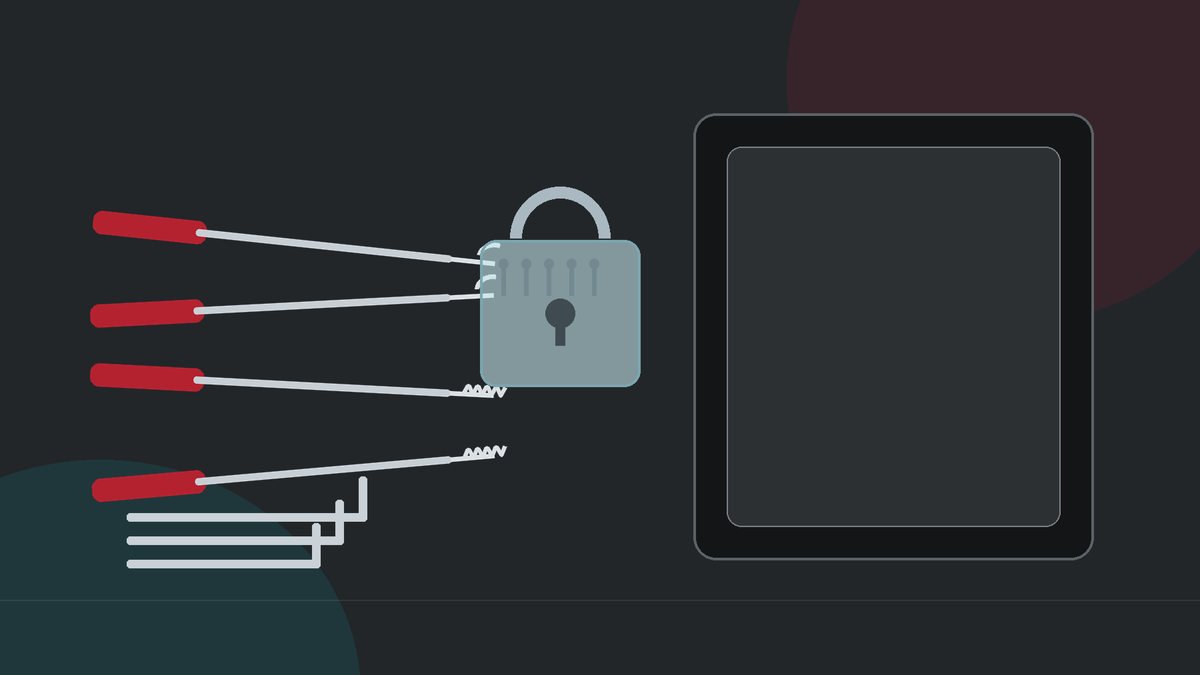
A beginner lock picking kit should include a small range of hooks and rakes, several tension tools, a protective case, and a dedicated practice lock. That compact combination teaches the two jobs involved in pin-tumbler practice: controlling the plug with a tension tool and manipulating pins with a pick. A larger tool count does not automatically make a kit more useful.
Start with locks you own for training or have explicit permission to manipulate. Do not practice on a lock that is installed or protecting property, even if you own it. Picking can damage a lock, and relevant laws vary by jurisdiction.
The quick checklist: what belongs in a beginner lock picking kit?
For most beginners learning on common pin-tumbler practice locks, a focused kit is enough:
- Two or three hook picks with different reach profiles
- One or two rake picks with distinct shapes
- At least three tension tools in different widths or thicknesses
- Comfortable handles or removable grips
- A case that protects thin tool shafts and keeps profiles visible
- A transparent, cutaway, or repinnable practice lock reserved for training
- A plain-language guide that identifies each tool and reinforces lawful use
This is a starting point, not a universal standard. A useful kit must match the learner's practice lock.
What do the essential tools actually do?
Tension tools control the plug
A tension tool is a small lever placed at the edge of a training lock's keyway to apply gentle rotational pressure to the plug. The plug is the part that normally turns with the correct key. Tension control is central to pin-tumbler practice, so several well-fitting tension tools are more valuable than a pile of nearly identical picks.
Hook picks provide controlled pin contact
A hook pick has a curved working tip designed to contact pins individually. Short and medium hooks give beginners two useful reach options without creating decision overload. The learner should be able to tell the profiles apart by sight and store them without the tips rubbing against harder tools.
Rake picks provide a different form of feedback
A rake pick has multiple peaks or curves that contact several pins during authorized practice. Including one or two clearly different rake profiles helps a learner compare feedback and understand why a tool that suits one training lock may not suit another. This article intentionally does not provide opening instructions for real-world locks.
A case protects both tools and hands
Thin picks can bend when loose in a drawer or backpack. A fitted case should hold tools flat, cover sharp edges, and support responsible storage away from children and unauthorized users.

Which lock type should a beginner kit target?
A first kit should usually target a standard pin-tumbler practice lock because the mechanism is easy to explain and widely represented in educational material. In a pin-tumbler cylinder, spring-loaded pins prevent the plug from rotating until the correct key aligns their breaks. This relationship between pins, plug, and keyway explains why a learner needs both a pick and a tension tool. ASSA ABLOY gives a concise technical definition of pin tumblers in its lock glossary.
Dimple, tubular, disc-detainer, and other lock families use different tool geometries or operating principles. A kit marketed as suitable for every lock type can burden a beginner with specialty tools that have no role in the chosen practice lock. Choose the training lock first, then make sure the kit is compatible with it.
How many tools are enough for a first kit?
About seven to twelve purposeful pieces can support a strong start. Coverage matters more than count: each piece should offer a different working profile or fit a different keyway opening.
Large assortments can still be useful later, but piece count is a weak quality signal on its own. Duplicate shapes, oversized profiles, and unrelated specialty items make identification harder. For a gift, a smaller labeled set with a compatible practice lock is usually easier to understand than a crowded roll of unfamiliar tools.
How should you compare build quality and fit?
Compare finish, stiffness, handle comfort, profile variety, and tension-tool fit before comparing price or piece count. The useful details are visible and practical:
- Edges should feel smooth enough for controlled practice and should not have obvious burrs.
- Tool shafts should return to shape under normal training pressure and show no cracks or deep corrosion.
- Handles should let the learner identify and hold a tool without obscuring its feedback.
- Tension tools should include visibly different sizes so one can fit without excessive play.
- The case should prevent tips from crossing, snagging, or pressing through the material.
Do not test quality by forcing a pick or twisting it as a substitute for the correct tool. If a tool remains bent, develops a sharp defect, or begins to crack, stop using it and replace it.
Should the kit include a practice lock?
Yes, a dedicated practice lock makes the kit safer and more coherent. A transparent or cutaway lock can show how pins, springs, and the plug relate, while a repinnable training lock can support progression after the basic mechanism makes sense. The training lock should stay loose and out of service; it should never be the lock protecting a home, vehicle, cabinet, or other property.
A University of Hawaii Maui College lock-picking primer similarly advises learners not to pick locks they rely on, such as a home or vehicle lock. That boundary protects both security and the lock itself.

Which extras can wait until later?
Specialty picks, decoding tools, powered tools, bypass devices, and vehicle-oriented tools can wait until the learner has a lawful use case, suitable training, and the correct practice hardware. These tools do not make a basic kit more complete merely by increasing its count.
A beginner set should build transferable control and vocabulary. Once the learner can identify the mechanism they intend to study, they can add the purpose-built tools for that mechanism instead of buying a broad assortment on speculation.
How do you choose a kit as a gift?
Choose for the recipient's learning environment, not for a dramatic product description. Confirm lawful possession, appropriate adult supervision where needed, and access to a dedicated practice lock. Look for a clear contents list, visible profiles, a case, and beginner educational material.
Holiday timing adds a practical reason to publish this guide now. The National Retail Federation reported on October 28, 2026, that 64% of US holiday shoppers expected to wait until Thanksgiving weekend to do most of their shopping, while quality and selection remained important store-selection factors. A comparison guide published before that window can help buyers evaluate a skill-based gift on substance rather than tool count.
What legal and ethical checks come before buying?
Permission and local law come first. The Open Organisation of Lockpickers' US code of ethics says members should manipulate only locks they own or have explicit permission to pick, avoid providing tools to people likely to use them criminally, and learn the relevant laws in every applicable jurisdiction.
That is ethical guidance, not legal advice. Tool-possession rules, burglary-tool statutes, locksmith licensing, age restrictions, and rules for carrying or transporting equipment can differ across US states, Canadian provinces, and local jurisdictions. Check current official sources for the learner's location before purchase, travel, or public practice. A legitimate training context does not override a local restriction.
A practical product-discovery path
Start with the intended practice lock, then compare kits in this order: compatible mechanism, tension-tool range, hook variety, finish and comfort, case quality, and educational support. If the kit lacks a dedicated practice lock, add one before training.
For help choosing dedicated training hardware, read our practice-lock selection guide.
Frequently asked questions
Can one beginner lock picking kit work on every lock?
No. Lock families use different mechanisms and keyways, and many require purpose-built tools. A first kit should match one dedicated training platform, usually a pin-tumbler practice lock.
Is a transparent practice lock enough for long-term training?
It is a useful visual introduction, but it is not the whole learning path. After the mechanism is clear, a purpose-built cutaway or repinnable training lock can provide more varied practice without putting an in-use lock at risk.
Does a beginner need a powered pick tool?
No. A basic manual kit teaches tool identification and controlled feedback with fewer variables. Powered and specialty tools belong in trained, authorized contexts and are not essential to a first set.
Should a beginner carry the kit in public?
Not without checking current local law and understanding the purpose of carrying it. Keeping the kit stored with its training lock and educational materials can document a lawful practice context, but it does not replace compliance with applicable rules.
What should you do if a pick bends or develops a sharp edge?
Stop using it. A permanently bent, cracked, corroded, or sharply burred tool can damage a practice lock or injure the user. Replace the tool rather than forcing it back into service.
